Monday, June 06, 2011

Protection by prosecution?

On Friday, the Pittsburgh Post Gazette published a letter to the editor co-signed by the Juvenile Law Center, the PA Psychiatric Society, and the ACLU of PA. The letter asks a basic question: How does prosecuting kids for sexting protect them? Protection by prosecution?

Here's the letter:
Educate teens

House Bill 815, which proposes to make any teen sexting a criminal offense, was passed by the state House of Representatives on May 23. HB 815 is being promoted as a measure to protect teens from possible exploitation -- through arrest, humiliation and saddling children with criminal records. Protection through prosecution?

This bill would make it possible for district attorneys to prosecute any teen who sends or receives any nude or partially nude photo -- even when a photo has only been shared consensually between two individuals.

Lawmakers should rightfully worry about protecting children from individuals who intend to harm by disseminating photos without consent or those who try to coerce others into taking and sending photos, including sexual predators or bullies -- something Sen. Stewart Greenleaf's SB 850 addresses more appropriately.

HB 815 fails to make the important distinction between consensual activity and cyberbullying -- two very different actions. It drags teens into the criminal justice system even when there are no victims, and creates a barrier to reporting abuse. If HB 815 passes, even the victim can be prosecuted. Kids who are coerced into sending photos are less likely to report the crime when they themselves may be prosecuted.

Teenagers make foolish mistakes. Does that make them criminals? We need to educate teens about the dangers of risky behaviors like sexting, not prosecute them. Criminalizing consensual sexting does the exact opposite of what it was intended to do. It creates victims. Let's focus on protecting children from predators, not district attorneys.

MARSHA L. LEVICK
Deputy Director and Chief Counsel
Juvenile Law Center
Philadelphia

DEBORAH SHOEMAKER
Executive Director
Pennsylvania Psychiatric Society
Harrisburg

The letter also was signed by Andy Hoover, legislative director, American Civil Liberties Union of Pennsylvania.

Labels: , ,

Friday, July 02, 2010

PA House on Teen Sex: Incarcerate, Not Educate???


Earlier this week, the state House passed legislation, House Bill 2189, to create a new crime called "sexting." Sexting is when someone, often a teenager (although apparently senior citizens and pro athletes are doing it, too), sends photos of him- or herself in various stages of undress or engaged in sexual activity to another person or persons via electronic communication. HB 2189 makes it a misdemeanor for a minor to engage in sexting if the photos involve nudity and were sent for the purpose of sexual stimulation. It's a summary offense if the photo was sent to one other person and the sender had a reason to believe that the recipient wanted to receive the photo, e.g. the teenage couple sharing pics with each other.

Under this bill, the transmission or dissemination of photos of a minor engaged in sex acts, including transmitting a photo of one's self, could still be prosecuted under the felony child pornography statute.

Look, let's face it, teenagers are going to dumb things. They're at an age where they are increasingly aware of their sexuality, and, at the same time, their brains are at a stage of development where they don't yet have the ability to stop irrational behavior 100% of the time.

You show me an adult who didn't do foolish things as a teen, and I'll show you an adult with amnesia.

HB 2189 is simply wrong-headed. Turning our kids into criminals for their clumsy behavior is cruel. Addressing teen misbehavior is a job for parents and educators, not prosecutors.

And the bill is based on the false premise, stoked by some reps and district attorneys, that all sexting by minors is currently a felony, a point that is repeated, ad nauseum, by the media. In fact, if the photos only involve nudity and the production and distribution of the photos is consensual, it's protected expression under the First Amendment.

Fittingly, there is a bill to ensure that teen sexuality is addressed in a constructive fashion. House Bill 1163, the Healthy Youth Act, would set minimum standards on sex education for Pennsylvania's public schools. HB 1163 would guarantee that students receive medically-accurate sex ed. The curricula that would pass muster under this bill would emphasize that abstinence is the only 100% effective of way to stop pregnancy and the transmission of STDs and would teach kids science-based information about contraception.

House Bill 1163 is neatly tucked away in the House Appropriations Committee, and many observers think that's exactly where it's going to stay because the chairman of the Senate Education Committee, Senator Jeffrey Piccola, has said that he won't consider the bill.

So to recap, the state House has passed a bill to turn kids into criminals for their clumsy sexual behavior and is simultaneously burying a bill to constructively teach kids about their sexuality, with the Senate Education Committee chairman as an accomplice.

In a word, this is a disgrace.

Andy in Harrisburg

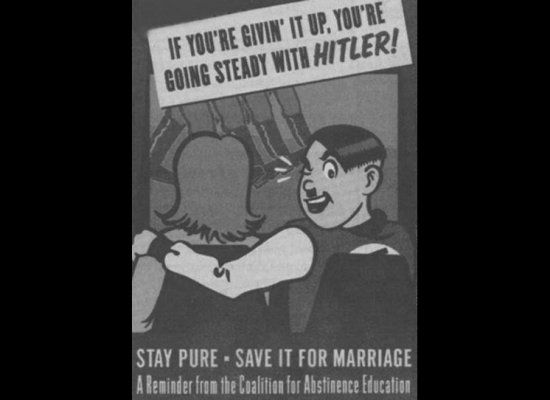
(The poster above comes from a series of hilarious sex ed posters posted on Huffington Post earlier this week.)

Labels: , , , ,

Thursday, January 14, 2010

Pass These Bills: A High School Student's View

At a hearing in Harrisburg about two sex education bills, the testimony by witnesses was revealing about the state of education - or miseducation - about sex in our schools. One expert stated the obvious: “Many students are misinformed about sex.” One of the reasons given is that many teachers do not teach about sex because they are uncomfortable talking about it, even though sex is natural and it is nothing to be ashamed of. Another issue is that many teachers are not sufficiently educated on the subject, so they are not qualified to teach it.

HB 1162 and HB 1163 need to be passed so that students have the opportunity to be educated on a subject that really matters in life. These bills will help students to get informed about safe sex, so when they decide to be sexually active they’ll know about more than just abstaining from sex. Abstinence is not the answer for everyone, so by having sex education classes in school, they’ll know about different ways to be safe.

Demia in Philadelphia

Demia Burrell is a junior at Mastery Charter School and will be interning with the ACLU until the end of the school year.

Labels: , ,

Thursday, October 22, 2009

Is that the Hallelujah Chorus I hear?

Yes, folks, we finally have a budget. Earlier this month – 101 days after it was supposed to be finished – the legislature passed a budget for the fiscal year we are already three and a half months into.

Aside from many, many agencies, schools, and organizations breathing a sigh of relief, what this also means is that the legislature can now get back to working on other things, including important bills on LGBT discrimination, capital punishment, and sex education.

A few to watch:

• House Bill 300

If you follow Speaking Freely or get email updates from us, you know that we were working hard on this bill – which would ban discrimination in employment, housing, and public accommodations on the basis of sexual orientation or gender identity or expression – before the budget impasse. We’re ramping back up now that the legislature is back on track and we need YOU to help get this bill moving again!

Even if you’ve done it already, please take a moment to let your representatives in Harrisburg know that this is something that’s long past due in Pennsylvania. There’s something for you to do no matter how much spare time you have.

If you only have two minutes:
Email your representative. Please take a minute and a half of your two minutes to add a sentence or two to personalize the email – for example, you might briefly summarize the story of a loved one who this law will affect; mention that as a person of faith, you support treating all Pennsylvanians with dignity and respect; or state that as a business owner, this is important legislation for you as you work to recruit and diverse and competitive workforce.

If you have five minutes:
Give your representative’s office a call and say the same thing. You can find the number by using the ACLU’s Find Your Legislator tool. Making a call often augments your voice with lawmakers – it is louder both literally and figuratively! If you have never done this before, don’t worry. All you need to do is tell the staff member who answers your name and address, the bill number you are calling about (HB 300), that you’d like Representative X to support the bill, and why (the personal notes mentioned above or a fact or two from our talking points).

If you have fifteen minutes:
Think about business owners or religious leaders you know who may be willing to sign on as supporters of this bill. Write a brief email or take a few minutes to speak to them about the importance of this bill and let them know that they can help show the diversity of groups that support anti-discrimination legislation. Have them contact us at aclupa@aclupa.org for more information about how they can help.

If you have half an hour:
Write a letter to the editor of your local newspaper. LTEs educate members of your community and are another way of making your voice heard with decisionmakers. You can see examples here or use our talking points for more ideas.

If you have an hour:
Visit your legislator! This is the most important way to make your voice heard with your lawmaker. Meetings can be held in-district (near your home) or in Harrisburg. Call your legislator’s office to schedule a visit. If you have never done a legislator visit before, contact aclupa@aclupa.org for help.

• Senate Bill 1110

This bill calls for a moratorium on executions while a comprehensive study of capital punishment in Pennsylvania is conducted. The study would include analyses of the death penalty’s impact on victims’ families, the potential for executing an innocent person, and the economic, geographical, and racial disparities present in the current system.

In 2007 the American Bar Association concluded that there is overwhelming evidence that the state’s death penalty system is flawed and that we are at risk of executing an innocent person. Among the problems with the death penalty are:

wrongful conviction – The most common causes of wrongful conviction are eyewitness error, government misconduct by the police and/or prosecution, mishandled evidence or the use of unqualified scientific “experts,” unreliable testimony from jailhouse snitches in exchange for a reduction in their sentences, and false confessions resulting from torture, mental illness, or mental retardation.

racial disparities – 69% of Pennsylvania’s death row inmates are racial or ethnic minorities, the second-highest death row minority rate in the country, and black defendants are more likely to be sentenced to death than white defendants, especially if the victim is white.

costs – Contrary to popular belief, it costs more to execute a prisoner than to house him or her for life. A new study released this week by the Death Penalty Information Center investigates other criminal justice needs that could use the hundreds of millions of dollars spent on capital punishment, including the need for 200 more police officers in Philadelphia.

deterrence – The science is inconclusive at best on the deterrent effect of the death penalty. Meanwhile, a national survey of police chiefs from around the country found that police chiefs do not believe the death penalty significantly reduces the number of homicides.

For more information on the death penalty, go to www.deathpenaltyinfo.org or check out our previous blogs on the subject.

• House Bills 1162 and 1163

After years of declining rates of teen pregnancies and teens contracting sexual transmitted diseases, those numbers are again on the rise. Why? Because the epic failure of abstinence-only-until-marriage education has come home to roost. Studies have shown that students who get abstinence-only sex ed don’t delay sexual activity and are less likely to use contraception than students who get comprehensive, science-based sex education.

The impact on public health is without question. Teen births cost the commonwealth more than $300 million per year.

House Bill 1163 (The Healthy Youth Act) would require all public schools that teach HIV prevention – which is all public schools in the state (although the bar for what qualifies as teaching prevention is low, e.g. “don’t have sex”) – to also teach comprehensive sex ed.

House Bill 1162 (The Notice Home Act) would require all schools that teach abstinence-only sex ed to send a notice home to parents informing them of the school’s sex ed curricula.

To learn more about this issue, visit the Pennsylvanians for Responsible Sex Education website.

Becca and Andy in Harrisburg

Labels: , , , , , , ,

Wednesday, July 29, 2009

Abstinence-Only Education Dealt Another Blow

Finally! When Obama released his budget, cutting funding for abstinence-only-until-marriage (AOUM) education, we were ecstatic but knew that there was a long way to go. Last week, the House voted by an overwhelming majority to eliminate almost $99 million in spending for these failed programs. Yay! It’s about time to try something new—like putting $114 million of new funding into programs that actually educate teens about how to stay safe. Good start.

Opponents claim that giving money to already “well-funded” comprehensive sex ed programs is unnecessary. Perplexingly, it would only decrease the amount of money going to youth education since it doesn’t look like AOUM is coming back anytime soon (fingers crossed!). Abstinence-only supporters bemoan these changes citing “studies” like the 2006 Zogby poll which they claim found that adults approve of AOUM over comprehensive sex ed 2:1. No surprise, as the study was commissioned by the National Abstinence Education Association. Fine. But it was never meant to be a public opinion poll, according to the Guttmacher Institute. More troubling is the way abstinence education was described to respondents. Of course a majority of American adults would support a program which “promotes an age appropriate discussion of contraceptives within the context of promoting abstinence as a healthy choice” (the definition of abstinence programs provided in the survey). Um…isn’t that comprehensive sex ed? Or are we mixing up our labels?

Maybe it’s all so confusing because the abstinence movement is struggling to create a more mainstream image. Jessica Valenti discusses how the “virginity movement” (her label for abstinence proponents) is troubled by their loss of standing due to budget cuts, studies showing their programs are failing, and the new pro-comprehensive-sex-ed administration. By publicly claiming that they are moving away from their “abstinence only and absolutely never mention contraception no matter what” approach they probably hope to garner more support. But, if teaching about STIs involves projecting gruesome images of syphilis infections on a big screen (newsflash: the rate of syphilis among teen girls increased by almost half during the abstinence-loving previous administration) and teaching about contraceptives means claiming that condoms fail more often than they work, we should all be wary.

But enough with depressing old news…in with the new! The House has taken a great step in the right direction towards the health of America’s youth. Next stop, the Senate. And then, hopefully, our schools!

Ruth and Dina in Philadelphia

Labels: , , , ,

Wednesday, April 08, 2009

The Power of Participation

“Why?” My roommate asked me when I told her I was going to Harrisburg the next day to lobby on behalf of the Healthy Youth Act and Notice Home Act.
“Why? Because lobbying is what you do when you want government change?” was my uncommitted response.

The next day, sitting in from of my Representative, offering data and statistics about how much money is wasted on abstinence-only-until-marriage ($6.7 million) and the number of teen pregnancies that occur in the Commonwealth (about 19,000), I realized something: I have so much power right now. This man has so many people telling him about different issues everyday that he likely has no time to research any of the topics himself. He depends on advocates like me and those who joined me to tell him about these issues.

This is not even the first time I have lobbied! But for some reason, it is the first time the message was clear to me about how important each citizen is to lawmaking. The Framers drafted the Constitution to include this aspect of government. They ensured that the people had a voice in how law was created and that no branch of government could silence it. No matter what form of lobbying you employ (visiting legislators, writing letters or emails, or calling their offices), you are contributing to change.

My lobbying partner and I were able to secure an immediate co-sponsor for the Notice Home Act as well as full support for both bills from a second legislator. The words we spoke compelled them to help initiate a change that will benefit thousands of students in Pennsylvania and that is a powerful thought. If (when!) these two pieces of legislation get signed into law, I believe a little piece of me will be in that signature, as well has the numerous other advocates that lobbied that day.

So that night, when I finally got home after the four hour bus ride, I was able to answer my roommate why I lobby. Why I requested off work to travel 200 miles to spend 15 minutes talking with a man I have never met before. Why I called my sister and my dad to tell them to write letters to their legislators.

Why?

Because it’s my right. Because it’s my duty. Because it’s what this country is about. You can’t get any more patriotic than that!

Shannon in Pittsburgh

*Note: The PARSE Coalition’s March 31st Lobby Day was an enormous success.
There were a total of 45 actual visits and 135 additional offices received hand-delivered packets of information from lobby day participants.

Since the lobby day 13 legislators have signed on as co-sponsors to the Healthy Youth Act. (Brown, Haluska, Harkins, Manderino, Moul, Mundy, Parker, Roebuck, Ross, Sabatina, Santoni, Walko, Wheatley)

We have had 6 legislators sign on as co-sponsors of the Notice Home Act. (Manderino, McIlvaine-Smith, Ross, Sabatina, Shapiro, and Walko)

Labels: ,

Wednesday, April 01, 2009

Y-N-T...Youth Need Truth!

Pennsylvanians for Responsible Sex Education (PARSE), a coalition of different organizations, including the ACLU of PA, sponsored a lobby day in Harrisburg yesterday in support of two new bills. The day was a great success as over 100 constituents from all over the state came and met with their legislators to advocate for the bills.

The Healthy Youth Act and the Notice Home Act, are geared towards bettering sex education policy in Pennsylvania. The Healthy Youth Act, which is sponsored by Representative Chelsa Wagner, would require the teaching comprehensive sex education in all public and public charter schools in Pennsylvania. This version of sex education would still include and stress abstinence as the only one hundred percent way to avoid pregnancy or STI contraction, however, it would also provide scientifically accurate, age-appropriate information on forms of contraceptives. The Notice Home Act would require a notice to be sent home to parents in the event that their school teaches or is having an outside instructor come in to teach an abstinence-only program, giving them the opportunity to opt their child out of the instruction. This seems especially important to anyone who has seen the antics of many of these “abstinence educators” like Derek the Clown. This bill is sponsored by former teacher, Representative Ed Pashinski.

A rally was held in the rotunda of the capitol building in Harrisburg, featuring several speakers including Jordyn Bowen, a Union City High School student who is for comprehensive sex education. Fun was had and some positive change was hopefully made! Thanks to all of those involved!

Check out a video that was taken of the event as well as a radio interview of another student.


Cassidy in Philadelphia

Labels: , , ,

Tuesday, January 13, 2009

Virginity Pledges: A Waste of Time and Money

Well surprise, surprise. Teens who take “virginity pledges,” (signed documents stating that they will wait until marriage before engaging in sexual activity) are not less likely to have sex than their peers according to a recent study conducted by Janet Elise Rosenbaum of Johns Hopkins University. (CNN.com “Virginity Pledges don’t Mean Much, Study Says”)

Pledge is an interesting word. It is defined by Merriam-Webster’s dictionary as “a binding promise or agreement to do or forebear.” Okay. Now let’s look closely at that definition so that it can be understood a little better. Promise and agreement are too pretty simple words, so I think those are understood. But what about binding? Webster’s went with “to exert a restraining or compelling affect.” Okay. What really makes something binding though? A piece of paper with a signature? If that were true there would be much more trust in regards to our local and federal governments. I mean, c’mon, how many signed “agreements” have been broken when the parties involved became less interested? Just take one look at our lame-duck President George W. Bush and his trail of broken promises or “agreements” because he had “executive power.” No, a signature on a piece of paper is not binding. What makes something binding is the ability of some group or person to enforce the signer’s agreement. This is true of legal documents (well most anyway.) It is this reason that virginity pledges just don’t work. There is nothing forcing these teenagers to follow through with their pledge in the face of love or even just lust. That is, unless their parents or clergy find out and, even then, it still is not binding. They won’t go to jail or be fined for breaking their promise…at least not yet.

So sex is forced to be secret, to be a shameful act, or one of delicious rebellion, depending on the kid. This need for secrecy is what makes policies like virginity pledges so dangerous. It is yet another barrier put up to stop teens from finding out about healthy sexual behaviors and the risks that are involved in unprotected sex. After hearing your Mom tell you how “truly proud!” she is of you for signing a virginity pledge, are you really going to feel like fessing up? “Oops!” probably won’t cut it. So you probably don’t tell, but you keep having sex. The problem here is schools that participate in virginity pledges probably only teach abstinence. Sex is off topic in home and at school, so knowledge on the subject comes from friends who have probably not discussed sexual health with an honest, knowledgeable adult. This is the reason why teens who take virginity pledges have sex as much as their peers but are much less likely to use a condom or contraceptives.

To make it even more obvious how ridiculous the use of virginity pledges are in light of the fact that they don’t work, is they are yet another example of wasted funds allotted for education. Pledges don’t work, plain and simple. Their usefulness is not being debated based on ideology alone, but rather, simple effectiveness. In a country that prides itself on creating effective systems and programs, virginity pledges should be erased due to their failure to produce results. That is not an ideological point of view; it is a logical one.

Cassidy in Philadelphia

http://www.cnn.com/2008/HEALTH/12/30/virginity.pledges/

Labels: , ,

Thursday, August 14, 2008

No condom = trust and commitment?

And so ends the What's the New What segment, "Sex Without Condoms is the New Engagement Ring", aired July 24th:
"I'm sure you have something to say about Pendarvis' new What. Don't be shy. Get it all out by e-mailing us"

And oh, oh boy, how the responses flooded discussion boards and blogs across the web.

The segment, which features Youth Radio's Pendarvis Harshaw, discusses how some youth who find themselves in committed, monogamous relationships are intentionally having sex without condoms after being clinically screened for sexually transmitted diseases and infections (including HIV)and receiving a negative from both partners.

NPR Listeners
did NOT want to hear this. They threatened to revoke their NPR contributions and even their listenership, and commented:
"I am absolutely disgusted by your program"

"Pendarvis Harshaw's essay should be on the WTF program."

Some argue that these youth are acting irresponsibly by intentionally engaging in unprotected sex while others argue that actually having conversations about sex and behavior and even taking the step to be tested is responsible behavior.

RH Reality check picked up and reports on the controversy (the segment on What's the New What begins at 16:15--I apologize for not editing) and discusses the piece's significance with its creator. Amanda Marcotte points out that this piece brings into question HOW we address youth and how we interact with youth.

Apparently, youths' choices are overshadowed with how every and anyone else thinks youth should be behaving. Well, if we are unwilling to even hear the reality of the experience of youth, how can we expect to connect with them or teach them about anything, including safer sex?

Additionally, if listeners are so opposed to youth sharing their stories (about sex) and realities (about sex) with other youth, going as far to say that NPR should not tolerate stories such as Harshaw's and should not broadcast it, what forms of censorship are they imposing?

The controversy does not stop here, however. Oh, no. The author's style, speech patterns and music choices are all brought into question. I wonder how the piece would have been received if any one of these factors were altered, even slightly. Many of these factors, including thoughts on race, class, gender and sexuality are all addressed through blogs such as feministing.com (where I originally found the piece), jezebel and boinboing.

Ellen at Duvall

Labels: , , , ,

Thursday, July 17, 2008

Saying 'no' to...federal funding

Refusing government funding--it's an illogical idea, no? Not when the money is mandated for ineffective programs that are rich in censorship, misinformation and cross the line of the separation of church and state. So it goes with Title V funding for abstinence-only-until-marriage programming.

Last Wednesday the Pittsburgh Post-Gazette published this article on the state's refusal to accept Title V funding.

So far, two letters to the editor, "Sensible Rejection" and "Teach What Works" have appeared in support of the article (and the refusal).

Pennsylvania is just one of the many states to refuse the funding.

Perhaps we're heading in a direction that champions access to comprehensive information and knowledge?

Ellen at Duvall

Labels: , , , ,

Monday, June 16, 2008

Government Accountability? What a novel idea.

Accountability. Now this a word I have heard time and again. I know the concept mostly in reference to law enforcement, particularly their response to sexual assault and intimate partner abuse. So, why hasn't it surfaced in other contexts of reproductive health, specifically abortion, contraception and sex education? In her latest blog post, Cristina Page suggests that politicians should hold the "pro-life" and "right to life" movements accountable. Accountable for what? For their failure to reduce the high rates of unintended pregnancy and reported abortion. The movements have successfully campaigned against access to safe abortion procedures while also decreasing access to contraceptives and accurate, life-saving information. Page suggests the upcoming election will provide a national forum where candidates can bring light to the contradictions of these policies.

Why wait until the election to ensure accountability? In truth, I don't think we have waited. A variety of initiatives are percolating across the states that ensure accurate information be provided in sexual health education classes, for example, the Responsible Education About life Act. In 2004, the March for Women's Lives brought together thousands who marched in Washington DC to demand political and social justice for women and girls. This brought us from the concept of "choice" that has been a myth due to the cut of federal funding for abortions, government bans placed on a variety of abortion procedures and the fact that nearly 87% of US counties lack an abortion provider, to the recognition of bodily integrity and the need to restore rights in order to stay healthy.

Activists know that those working in favor of reproductive justice do more in one day to prevent unplanned pregnancies than the "pro-life" movement has done in a generation. This includes dispensing birth control, condoms and emergency contraception and providing people with accurate information about biology and reproduction. However, the messages sent by those in opposition to these methods have been extremely successful in overshadowing these successes and restricting rights.

Page points out that under the current administration we have more than enough reason to demand accountability. However, we don't seem to be too enthusiastic about it. We have continued to let the government lie to us about the reality of the war in Iraq while simultaneously allowing them to strip us of our civil liberties.

Demanding the right to health is something that clearly goes past the lines of pro-choice, pro-life and anti-abortion (to name a few). It simply comes down to justice and human rights, which are not up for debate.


Ellen is an intern at the Duvall Project

Labels: , , , ,

Wednesday, February 27, 2008

Across the Nation, Parents and Teens are Taking Action

The Philadelphia Inquirer recently reported on a high school in Mullica Hill, NJ, that is drawing criticism from concerned parents over their peer-education sex ed program. These parents have organized and even created a Web site for parents to sign a petition and get a look at the “very graphic” curriculum their teens are being subjected to. Some of the “disturbing” material chosen for its particularly lurid content, includes information on things that kids don’t know about (masturbation), things they should never know exist (condoms) and things they should never consider (tolerance of the LGBT community).

Depressing and intolerant as that may seem, students and parents in other communities are taking positive steps toward education, such as a group of teens in Utah who lobbied their senators for full disclosure in sex ed.

In addition, not all parents are as reactionary as those few in Mullica Hill, NJ. In fact, some open-minded and involved parents are becoming advocates themselves, such as a group of parents in Pittsburgh who have started a petition for comprehensive sex ed. They are supported in their efforts by the ACLU of Pennsylvania.

In a warmer part of the country, Palm Beach County, FL, has realized that abstinence-only programming won’t help their state’s teen pregnancy woes; they are set to enact in April a sex-ed curriculum that teaches sixth graders about STD’s and seventh graders about condoms.

Peer education is taking off on the West Coast as well. In the San Fernando Valley, one program, Promoting Alternatives for Teen Health, is a peer-to-peer curriculum aimed mainly at poor Latinos. I wonder if the concerned New Jersey parents could look at the grim statistics on HIV infections and pregnancy rates amongst these teens and still insist they shouldn’t learn about condoms.

Another grim reason for increased sex education: unprotected oral sex may be more dangerous than originally thought. A recent study links unprotected oral sex to certain dangerous side-effects, including some rare throat and mouth cancers that previously were seen mainly in older heavy smokers. We can therefore expect to see such anomalous cancers in youth become more common if abstinence-only programs continue to preach a message where sex is shrouded in mystery and protection is never discussed.

Marshall at Duvall

Labels: , , ,

Wednesday, February 20, 2008

Oral Sex: The New Frontier

Although arguably more intimate than vaginal or anal intercourse, oral sex is the new third and a half base. To put off taking their relationship to the next level and all of its risky consequences – including pregnancy and STDs – teens are giving their male partners blow jobs and eating out their female partners like it’s no big deal. Unfortunately, they do not realize that these behaviors can also lead to some unwanted party favors.

Between 1973 and 2004, the rate of HPV-related oral cancers among people in their 40s has almost doubled, according to researchers from Johns Hopkins. By “bathing [their throats] with HPV-infected fluid” – possibly THE BEST description of oral sex, I might add – Dr. Bernadine Healy implies that teens are significantly increasing their chances of developing cancer in their tonsils and at the base of their tongues. This is based on the idea that the number of teens engaging in oral sex has significantly increased in recent years. However, sexperts at Guttmacher and SIECUS argue that this might be a misconception: it’s possible that this much oral masturbation has been around for a long time, but teens have just kept it to themselves. Regardless, it is known that rates of STDs are on the rise, and we must protect our youth.

According to Dr. Healy, the solution is simple: scare the beep out of them. In a recent U.S. News and World Report posting, Dr. Healy states that “providing our young people with graphic medical information and stern parental and medical guidance is long overdue.” That’s right, show them gruesome pictures of the worst cases of pharyngeal gonorrhea and oropharyngeal cancer ever documented and then try to convince them that this could happen to them. On top of that, have their parents remind them to abstain from any and all sexual activity, including oral sex, every time they leave their house. Right, that should totally work…

Wrong. As we all know, the scare tactics used by abstinence programs don’t work. Teens look at pictures of mouths, eyes, vaginas and penises with hideous blisters, patches of irritated skin, enflamed lumps, leaky pustules – well, you get the picture – and cannot conceive of the fact that their bodies would ever look like that after a few hookups. Although they need to be aware of the risks, it is more important to empower children to practice safe sex.

Also, what kid listens to everything their parents say? I mean, how many of you did things just because your parents told you not to, especially when their only explanation for not taking part in something seemingly fun was “Because it’s dangerous.” Does not the term adolescent refer to a developmental stage during which humans engage in rebellious acts? All hope it not lost, however; children do listen to their parents, but only when parents are truly willing to talk to them about things. Healy’s “stern guidance” is not the answer.

While Dr. Healy acknowledges that teaching safe sex is important, the doctor fails to recognize some of the less obvious downfalls of close-but-not-quite comprehensive sexuality education. The answer truly is a combination of comprehensive sexuality education for both parents and teens, including how to engage in open conversations regarding sexuality. Although some adults in positions of power do not know this, teens everywhere are beginning to fight the good fight. Just this week, junior high school students in Utah were lobbying lawmakers for better sex education. Because their parents know so little, they need teachers to tell them “how to have protected sex.” If children can understand that they will at some point need to know how to protect themselves from STDs and pregnancy, why can’t lawmakers?

Stephanie at Duvall

Labels: , , ,

Friday, February 08, 2008

Making Condoms Cool

Do you ever think, “Wow, I wish I was that cool in middle school”? Usually, I get that feeling when watching something like Hannah Montana on the Disney Channel. I mean, have you seen that girl’s closet?

No, for me, middle school was a lot of time spent in Dr. Watlington’s office having my braces tightened (torture chamber for teeth) and a lot time spent hiding in bathrooms during “dances” (torture chambers for hormones). In few words, I was not very cool.

So I experienced an immediate sense of jealousy when I read about two teenagers - nay, middle schoolers- who were suspended for protesting their school’s abstinence-only “sex ed” program. And while my middle school protest against horrible abstinence-only programming was to swipe a bunch of virginity pledge cards from the classroom, these girls had the courage to put themselves in the direct line of fire.

Earlier this week, Tori Shoemaker and Cheyenne Byrd donned home-made shirts that read “Safe Sex or No Sex” and went into school, teaching their classmates more about safe sex than their school’s curriculum. And, naturally, they were suspended, because, as one school official said, the shirts were a “distraction.”

Teaching safe sex practices to middle schoolers is a testy subject. After all, Middle School is split between the girls who can and can’t wear denim miniskirts. I was not a girl who owned a denim miniskirt, but there were plenty of them in my class – and the boys noticed them. As unpleasant as it is, middle schoolers, yes, those youth who only a year ago professed their undying love for Hannah Montana, are having sex.

But what do you do? This problem confronted my alma mater, an all-girls school grades 6-12 when I was a student there. When they were redesigning (thank goodness) the horrible sex-“ed” curriculum I endured, they ran into the problem of explaining sex to those less mature girls in the class, for whom those lessons are not yet applicable.

Simple. Herd all the eighth graders in a room, weed them out by skirt length, and send the girls like me away, clutching our copies of Harry Potter under our arms, then keep everyone else there for a sex lesson. No, that’s a horrible idea.

Sex ed in Middle Schools isn’t just for the kids who need it now. It’s for the kids who will need it later. A study by the Guttmacher Institute states that many teens receiving sex education are getting it too late. WE HAVE TO CATCH THESE KIDS EARLY.
The Guttmacher Institute figured it out. Two eighth graders figured it out. You can’t just slide sex-ed into a high school curriculum midway through the year and hope you only missed a few. Sex ed has to start early. Because the kids who don’t need it in middle school become the kids who learn about it too late in high school, or not at all.

Marshall Bright is a freshman at the University of Pennsylvania and an intern at the Clara Bell Duvall Reproductive Freedom Project, ACLU of Pennsylvania

Labels: , , ,

Wednesday, December 05, 2007

The Gym Class Heroes said, “We have to take our clothes off to have a good time,” but my teacher keeps pushing this abstinence thing?

While hip activists listen to WHYY traveling in their cars, my dirty little secret is that I enjoy singing along to the music of the masses on WPST. This week, my unhealthy obsession with pop music paid off, as I became inspired by the ordinarily obnoxious Gym Class Heroes…

“So here’s the thing,” apparently today, “we have to take our clothes off to have a good time,” according to the Gym Class Heroes. “Oh no,” but I thought Jermaine Stewart said that “we don't have to take our clothes off” in the mid-80s. Two decades ago, “we could dance and party all night” and “get to know each other better, slow & easily.” In the light of the AIDS epidemic, even pop artists were preaching about having sex only within the context of a committed relationship. Now, musicians (if we can even call them that) are singing about “good clean fun” in the form of one night stands at clubs.

Now, I know the Gym Class Heroes aren’t beckoning to their steady girlfriend or wife when they say, “What do you say let's exit stage left so me and you can possibly reconvene and play some naked peekaboo?” Through such songs as these, young males are learning how to sweet talk a woman out of her pants for some backroom, uncomplicated fun. But things can get pretty complicated when you don’t know how to protect yourself…

Today, millions of federal dollars are being spent on abstinence-only education annually. In public schools everywhere, kids are being taught to feel guilty about sex and to not use condoms because they “don’t work.” But I thought condoms were highly effective, even as high as 98%, if used consistently and correctly… Unfortunately, it’s a vicious cycle: Abstinence-only programs teach that condoms are ineffective, they don’t show kids how to properly use a condom, improper use of condoms or lack of condom use can’t protect youth, and then the abstinence-only advocates get the condom failure rates they’re looking for and come out on top (no pun intended).

Listen up: Kids are taking their clothes off and partying all night to have a good time. It is absolutely irresponsible to preach abstinence-only. Adolescents need adults to give them the tools needed to protect themselves from unwanted pregnancy and sexually transmitted infections (STIs). Although AIDS is no longer the death sentence it once was, even the writers of Boston Legal know that “one time unprotected sex can kill you” and “a condom can save you.” Why isn’t every child in the world taught this?

Stephanie Chando, Duvall Project Intern

Labels: , , ,